
The Twentieth Mallet-Milne Lecture
Ellen M. Rathje
The Evolution of Site Response Analysis: Where we have been and where are we going
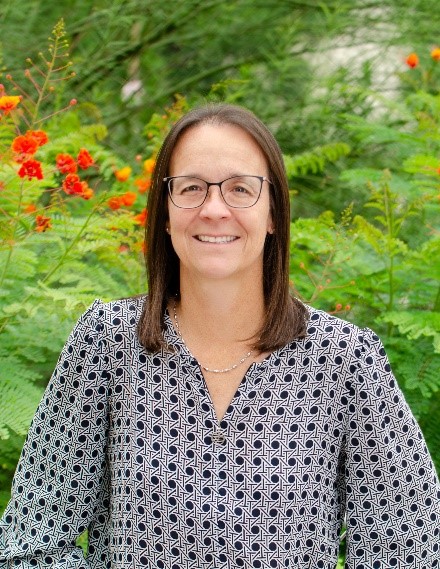
Ellen M. Rathje
Introduction
We are delighted to announce that Professor Ellen M. Rathje has accepted the invitation by the SECED Committee to deliver the 20th Mallet-Milne Lecture next year. As with previous Mallet-Milne lecture nominees, this recognises Prof Rathje’s wide contributions to earthquake engineering theory, practice and education. The 20th Mallet-Milne lecture will be delivered in the ICE Headquarters in Westminster, London, on the 26th of May 2027.
Synopsis
Local soil conditions can dramatically amplify — or in some cases attenuate — the ground shaking that reaches a structure during an earthquake. For more than five decades, one-dimensional (1D) site response analysis has been the foundational tool for simulating these effects, and it remains central to seismic design practice today. Yet the method has evolved substantially, and understanding this evolution is essential for anyone who relies on site response results for seismic hazard assessments, design ground motions, or performance-based evaluations.
This lecture traces that evolution through the lens of Prof. Rathje’s extensive experience on seismic hazard projects for nuclear facilities — a context that demands exceptional rigour, transparency, and defensibility, and one that has consistently pushed the boundaries of engineering practice. The lecture traces the developments that span the full arc of site response analysis, from advances in small-strain site characterisation (shear wave velocity, damping, and HVSR measurements) to improved approaches for modeling large-strain behaviour. It also examines the role of Random Vibration Theory (RVT), which enables robust analyses without the need for input ground motion time histories, as well as emerging methods for quantifying parametric uncertainty in key model inputs.
The practical role of open-source tools — particularly strata and the Python-based pystrata — is highlighted, demonstrating how these platforms have made advanced analysis methods more accessible to practicing engineers. The lecture concludes with a forward-looking discussion of the field’s priorities, including the need for broader validation across diverse site conditions and shaking intensities, and the challenges associated with incorporating multi-dimensional site response effects.
For further information about the Mallet-Milne Lecture, SECED’s biennial prestige lecture, and its previous awardees, please see here.
Biography
Dr. Ellen M. Rathje is the Janet S. Cockrell Centennial Chair in Engineering in the Fariborz Maseeh Department of Civil, Architectural, and Environmental Engineering and a Senior Research Fellow at the Bureau of Economic Geology at the University of Texas at Austin. She is an expert in the areas of engineering seismology, seismic ground response, and earthquake-induced ground failure.
Dr. Rathje is the current President of the Earthquake Engineering Research Institute and she is a founding member and previous Co-Chair of the Geotechnical Extreme Events Reconnaissance (GEER) Association. She leads the DesignSafe cyberinfrastructure that supports research in natural hazards engineering. Her awards include the 2022 Peck Lecture Award from the ASCE Geo-Institute, the 2018 William B. Joyner Lecture Award from the Seismological Society of America and the Earthquake Engineering Research Institute, and election to the National Academy of Engineering in 2025.
Further information
Further information will be published in due course at the event link here.